


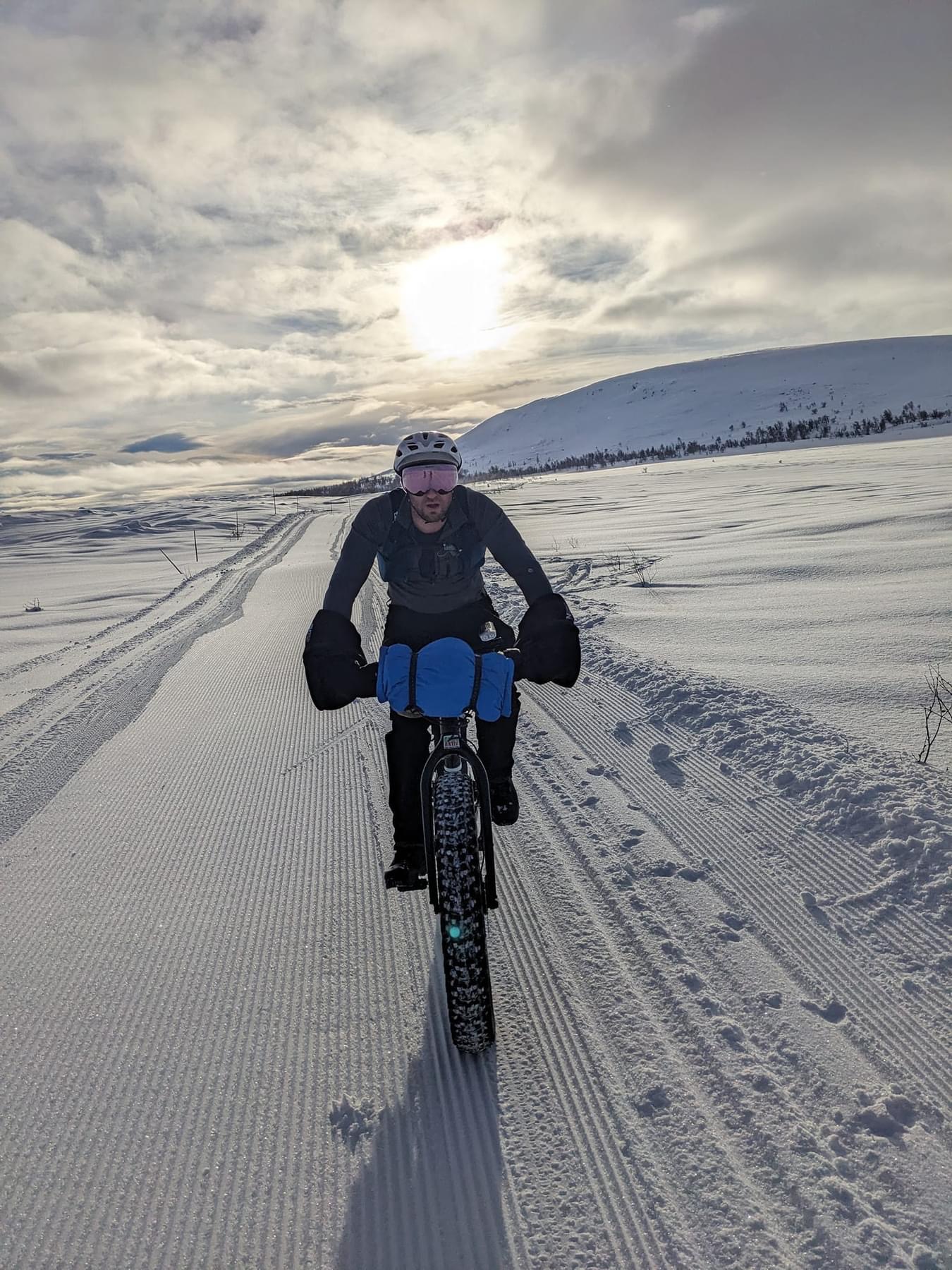
06 Feb Fat Viking – Ultra Endurance Fat Bike Race Across the Arctic
Fat Viking – 150km Across Arctic Norway
In January 2024, in what can only be described as another poor life choice, I signed up for the Fat Viking — a 150km fat bike race across Arctic Norway.
At the time of entering, I had never ridden a fat bike.
This did not, in any way, deter me.
Why?
During Covid, like most people, I watched a lot of Netflix. Unlike most people, I seem to have taken it as career guidance.
One documentary in particular — Safely to Nome — follows competitors in the 1,000-mile Iditarod Invitational. It’s widely regarded as one of the toughest endurance races in the world.
People have died doing it.
Naturally, I thought: I’ll have a go at that.
Unfortunately, they don’t just let you sign up. You need to qualify. To qualify for the full race, you must first complete the shorter 350 mile race. To be invited to complete this, you first need to complete a number of “qualifying events.”
The Fat Viking was such an event. At the time, the only one in Europe.
So off to Norway it was.
Getting There
I flew into Bergen and took the train to Geilo. A spectacular journey through frozen landscapes that slowly removes any illusion that you’re going somewhere sensible.
Having never ridden a fat bike before, I signed up for the training camp.
This was, in hindsight, an excellent decision.
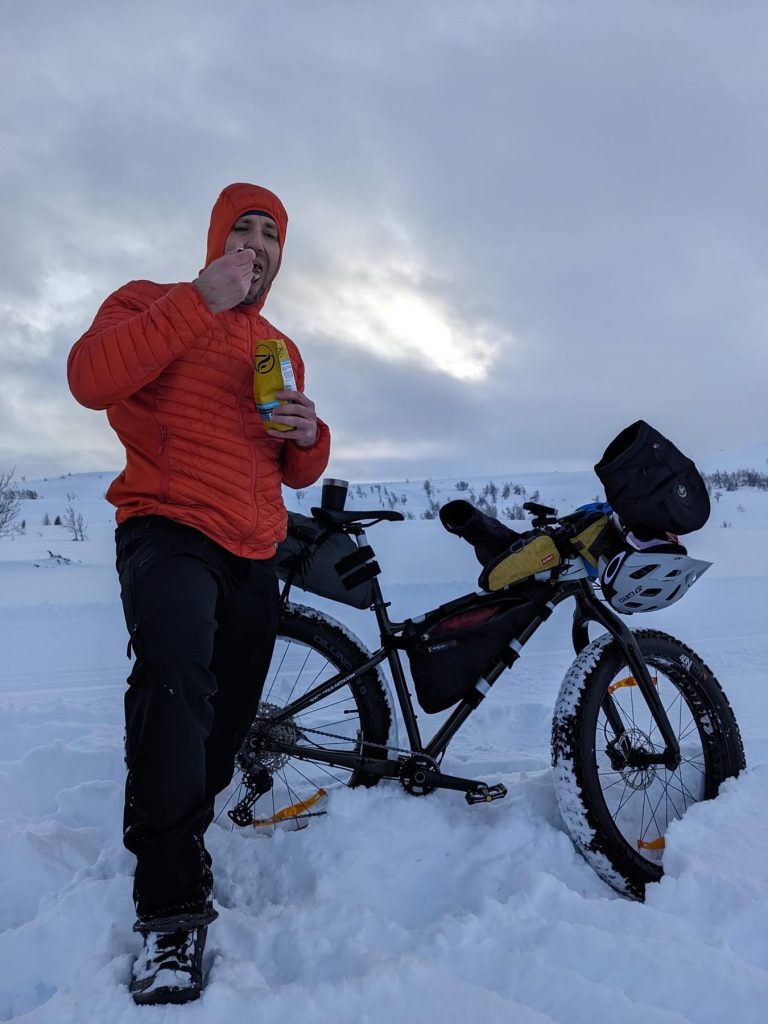
Not only did it teach the basics,riding on snow, balance, line choice, but it also covered the practical realities: how to pack the bike, what needs to be accessible, and how to fix things when (not if) they go wrong.
It also removed a lot of the “what if” stress. You go into the race knowing what to do when things fall apart. which they inevitably will.
I also met a number of the other competitors — many of whom, reassuringly, were in exactly the same position.
Kit Check & Briefing
Before the race, we had a full mandatory kit check.
No kit, no race. Simple.
Then came the briefing.
This is where things escalated slightly.
I learned that, technically, I’d be representing Great Britain. Apparently, because the race is sanctioned by the international cycling federation, that’s how it works.
Which felt like a lot of responsibility for someone who had only just learned how to ride the bike.
We were also issued with trackers.
The explanation was reassuring:
“This is a self-supported race. If you press the SOS button, we’ll do our best but don;t expect us to come rescue you… If there’s a blizzard and you can’;t see your hand in front of your face, how do you expect us to be able to find you?”
This basically translated to the tracker merely being a way for them to find your frozen corpse in the event of an emergency.
Good to have clarity.
The Start
During the week, I’d met Vin Cox. An extremely humble, yet accomplished cyclist who, as I only discovered near the end of our weeks course together, had held the world record for cycling around the world in the quickest time!
He gave me one key piece of advice:
“Everyone will go off too fast. Don’t.”
So we didn’t.
We set off at a pace that felt almost suspiciously slow. But over time, we started passing people who had gone out like it was a 10km time trial rather than a 150km survival exercise.
I stuck with Vin for as long as I could, but I’d already told him not to wait for me. Eventually, he disappeared into the distance, which felt about right.
The Course (or lack of it)
The course had been “groomed.”
This turned out to be more of a suggestion than a fact.
Fresh snow the day before (and during) the race, combined with winds of up to 70mph, made things… interesting.
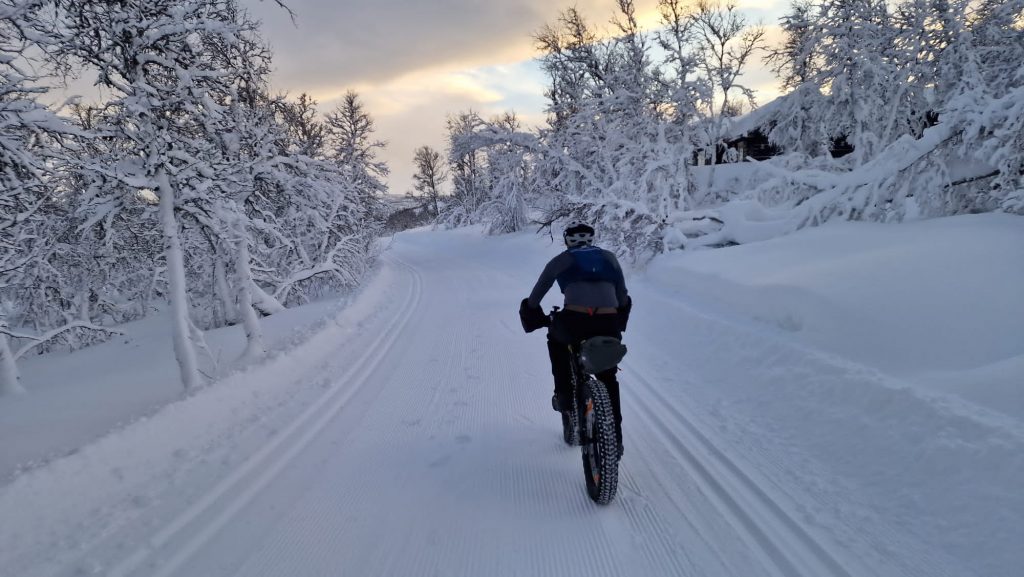
Most of the route follows narrow dog sled and snowmobile tracks. As long as you stay on them, it’s manageable.
The moment you drift off, you go from relatively firm snow to waistdeep powder.
Front wheel disappears. Over the handlebars you go.
I stopped counting after about 40 crashes. It was probably closer to 60.
At one point, just after dark, I went over the bars and ended up completely buried in the snow.
Disorientated. No idea which way was up. My bike, and therefore my light, also buried.
For a moment, it was pitch black.
That was the first time in any event I’ve done where I genuinely thought:
“This could go badly wrong.”
I eventually dug myself out, found the bike, and carried on. From that point on, I ran both a helmet light and bike lights.
It also prompted me, on returning home, to write a will!
The Seven-Hour Walk
After the second checkpoint came what I can only describe as the low point.
A 10km section that was, completely unrideable.
Waist-deep snow. No track. No flow. Just dragging and carrying the bike.
It took me seven hours.
It became less of a race and more of a prolonged negotiation with myself:
-
“Just get to that tree.”
-
“Don’t stop.”
-
“You’ve made worse decisions than this.”
This was, without question, the hardest part of the day.
Micro-Sleeps (Highly Recommended)
By this stage, I was properly tired.
At one point, descending a ski run — with limited braking and even less control — I started having micro-sleeps.
You close your eyes for a fraction of a second, open them again, and have absolutely no idea where you are.
Then it clicks.
You’re flying downhill, in the dark, on a bike, in the Arctic, completely out of control. It does wake you up!
Not ideal, but we carried on.
The Finish
At the final checkpoint, I teamed up with a guy called Joe from Liverpool.
At this stage, it made sense to stick together. Morale, navigation and general survival.
We crossed the finish line together in 24 hours 40 minutes.
Last two across the line.
Also the only two amateurs in the race, which feels like an important detail.
Out of roughly 40 starters, 18 finished.
The Grand Finale
The only slight anticlimax was the finish logistics.
Despite having arranged a late checkout, the hotel had double-booked the room.
So instead of a triumphant collapse into a bed, I was sent back to pack my things and leave.
I got the train back to Bergen, checked into an airport hotel, and had one of the best sleeps of my life.
Final Thoughts
It was brutal, cold, unpredictable, and occasionally concerning.
But also brilliant.
And more importantly, it ticked off one of the qualifying races needed for something much bigger.
Which, in hindsight, probably means I’ll be making more poor decisions in the near future.
Sorry, the comment form is closed at this time.