5 February 2026 · 8 min read
A Scottish Canoe
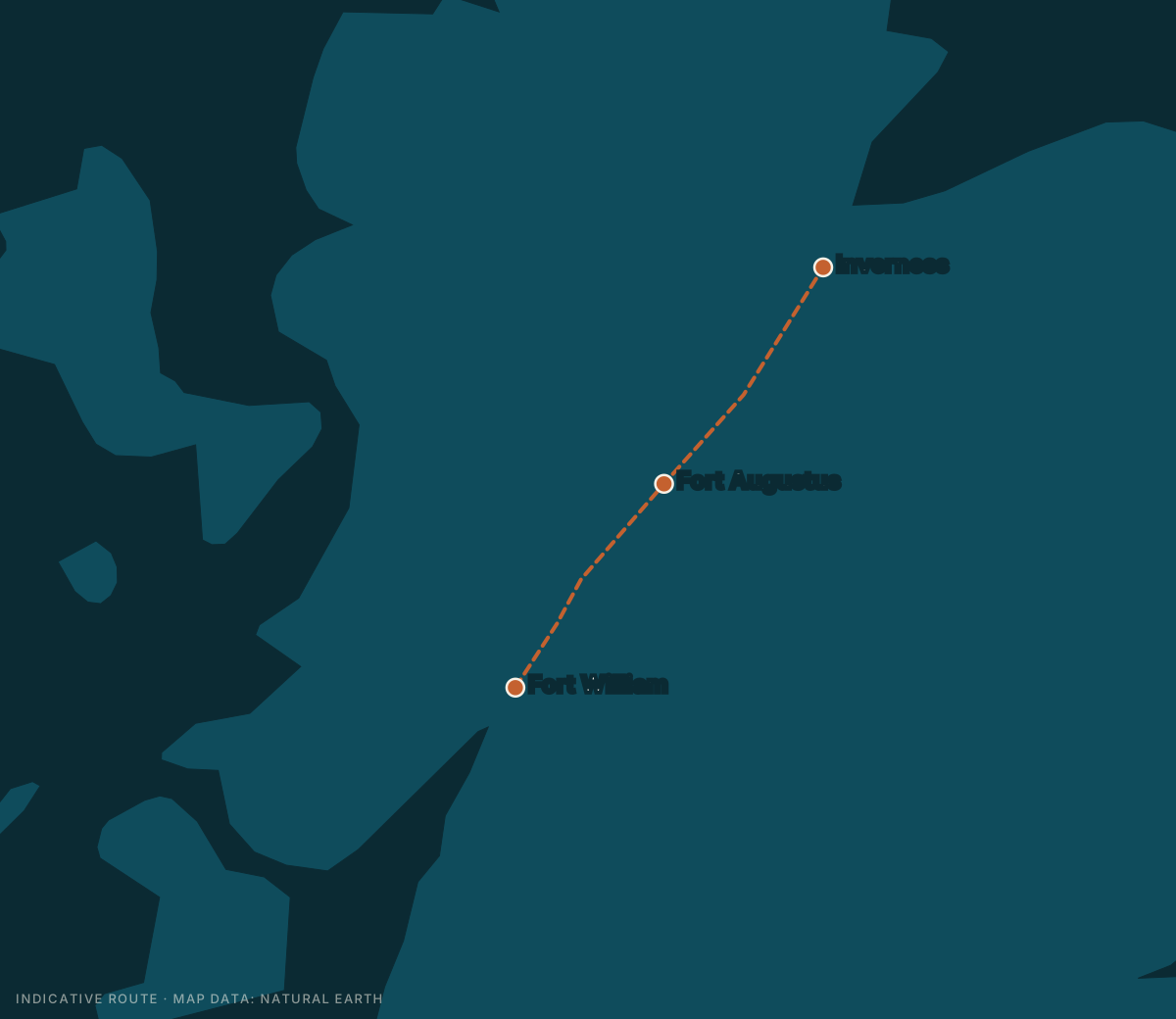
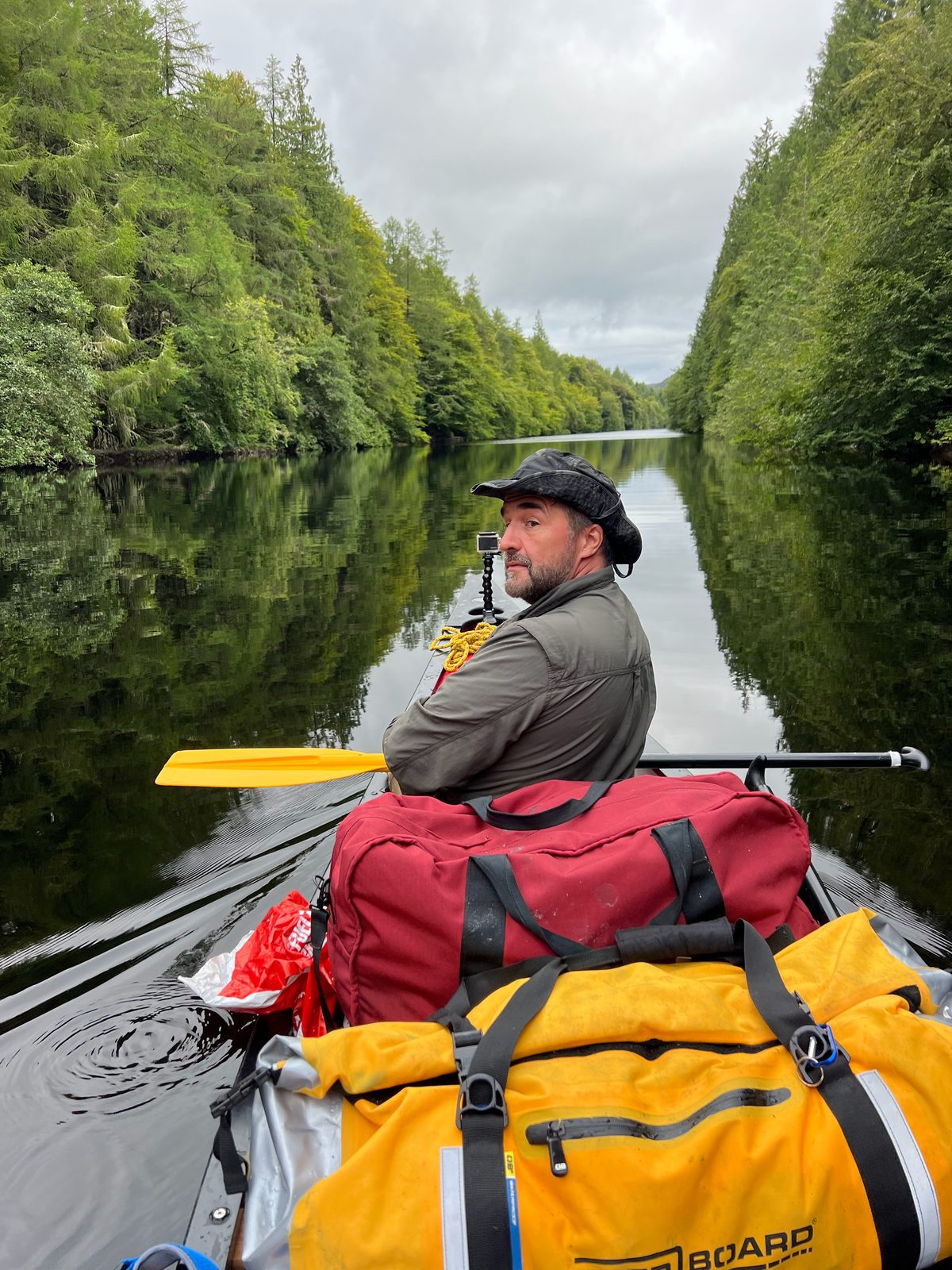
A couple of years ago, I stumbled upon a mesmerizing photo of a rowboat gliding through a mirror-like lake, in beautiful sunshine, with vibrant green trees perfectly reflected on either side. After some investigation, I learned that this wasn’t a lake but a Scottish ‘loch.’ This discovery led me down the rabbit hole of rowing expeditions in Scotland, where I found out you can row the width of the country, from Fort William on the west coast to Inverness on the east coast, a journey of about 100 miles, in less than a week, following the Great Glen Way.
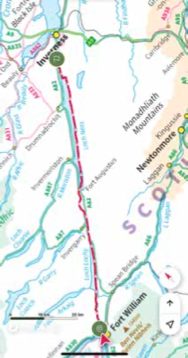
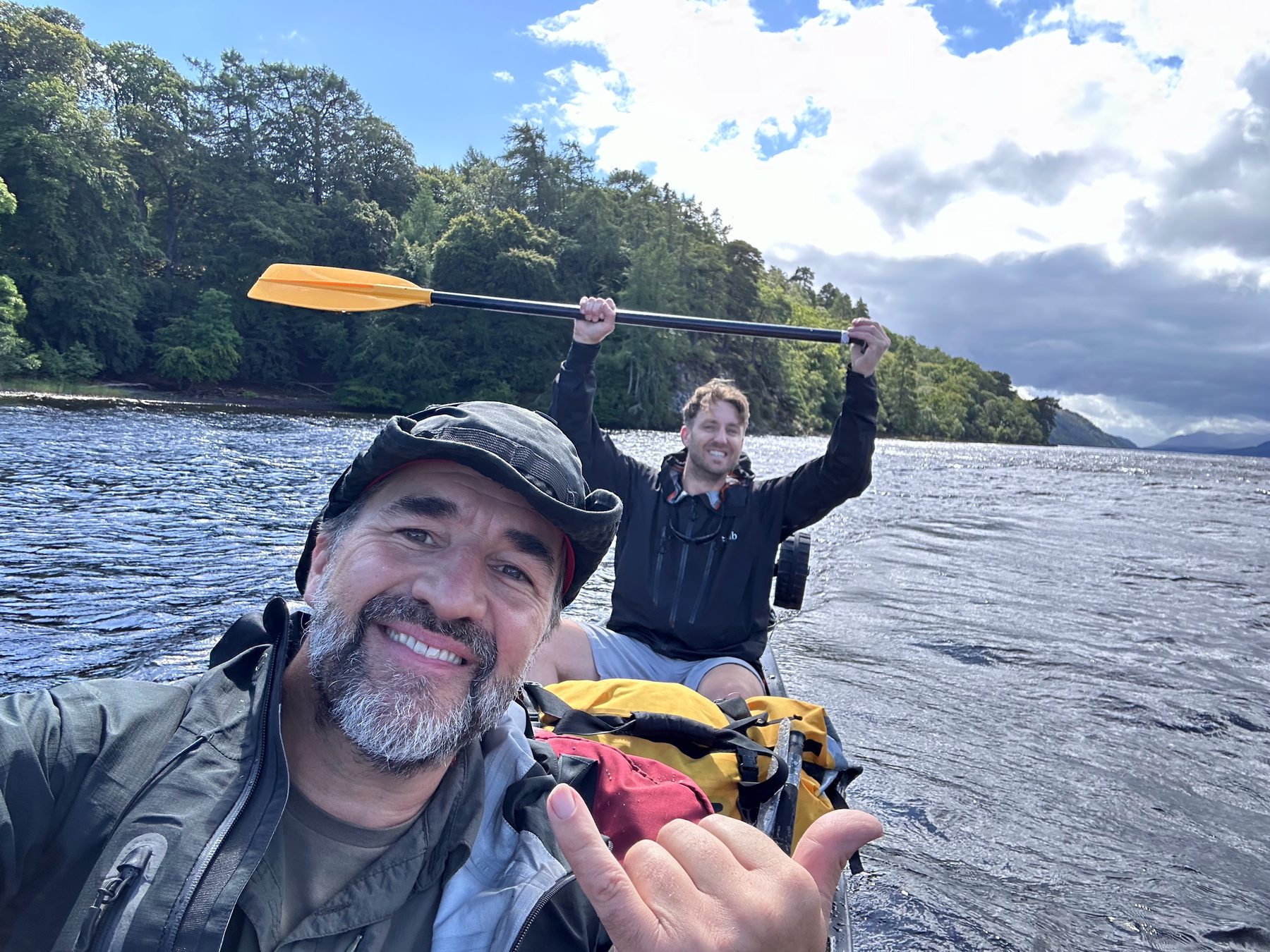
I’ve done a bit of rowing in the past; however, this was to be my first time in an open canoe. Typically, the trip is led by a guide, but with my experience as a ship’s captain and my teammate Bran’s former special forces background, we figured we were adequately qualified to travel unsupported and managed to convince the rental company the same.
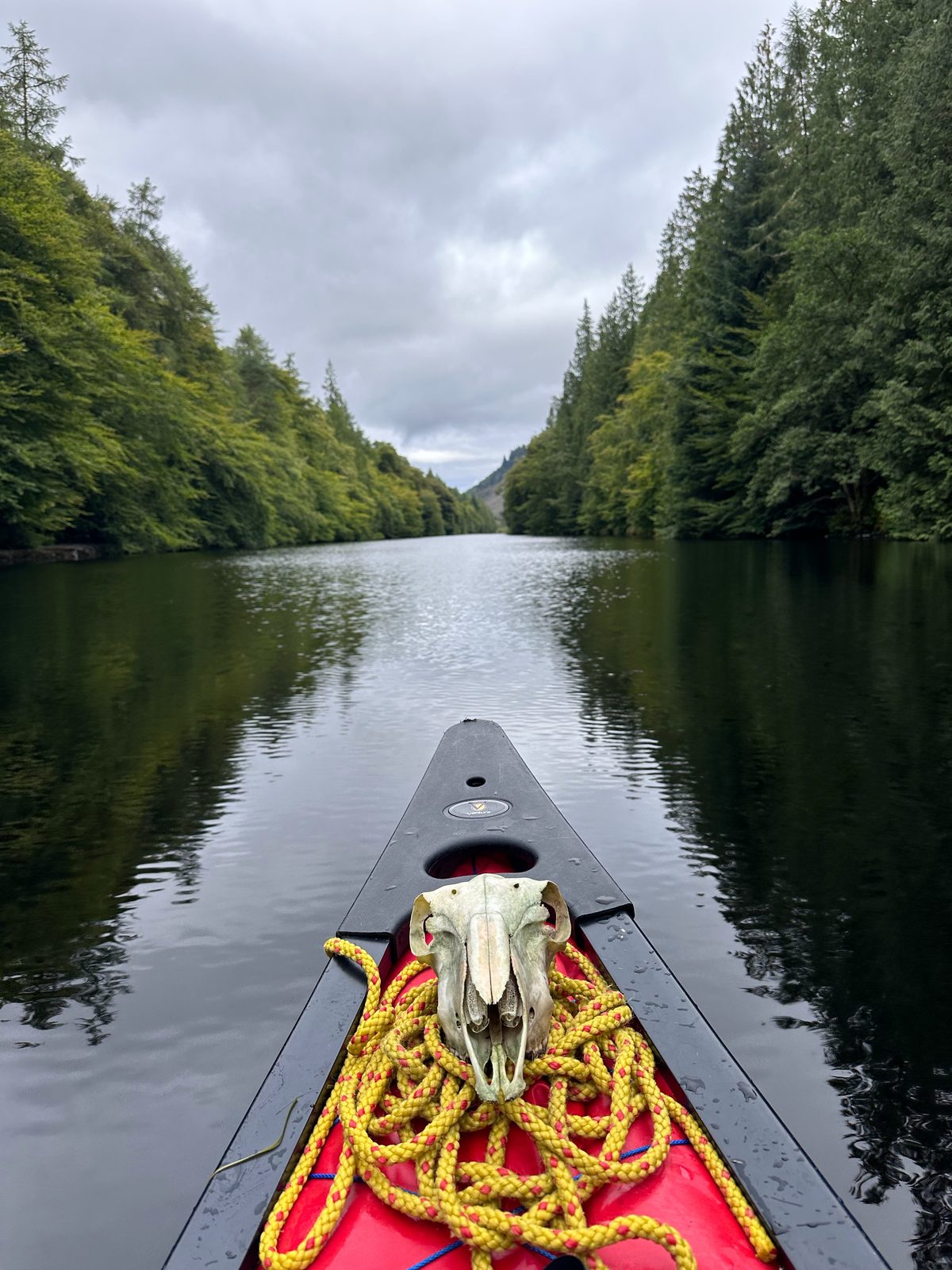
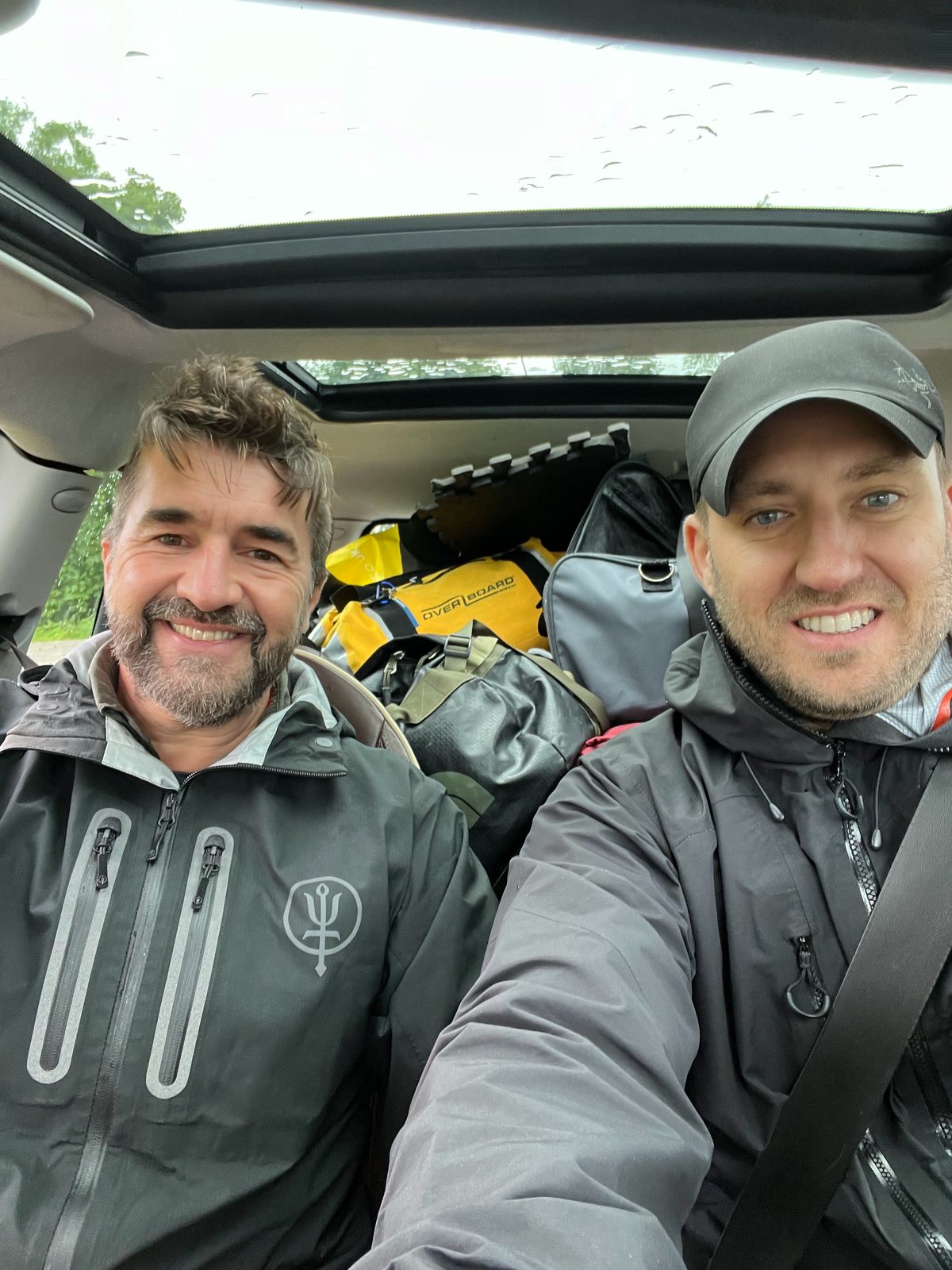
We set off by car early on a Saturday morning under clear skies, but almost on cue, as we crossed the border and saw the sign ‘Welcome to Scotland’, the weather turned. The rain started and, barring a brief intermission two days later, it didn’t stop for the next week.
After arriving in Fort William, we checked into our hotel, before heading into town for a bite to eat and to sample some local whiskies—an essential part of the Scottish experience.
Day 1: The adventure begins
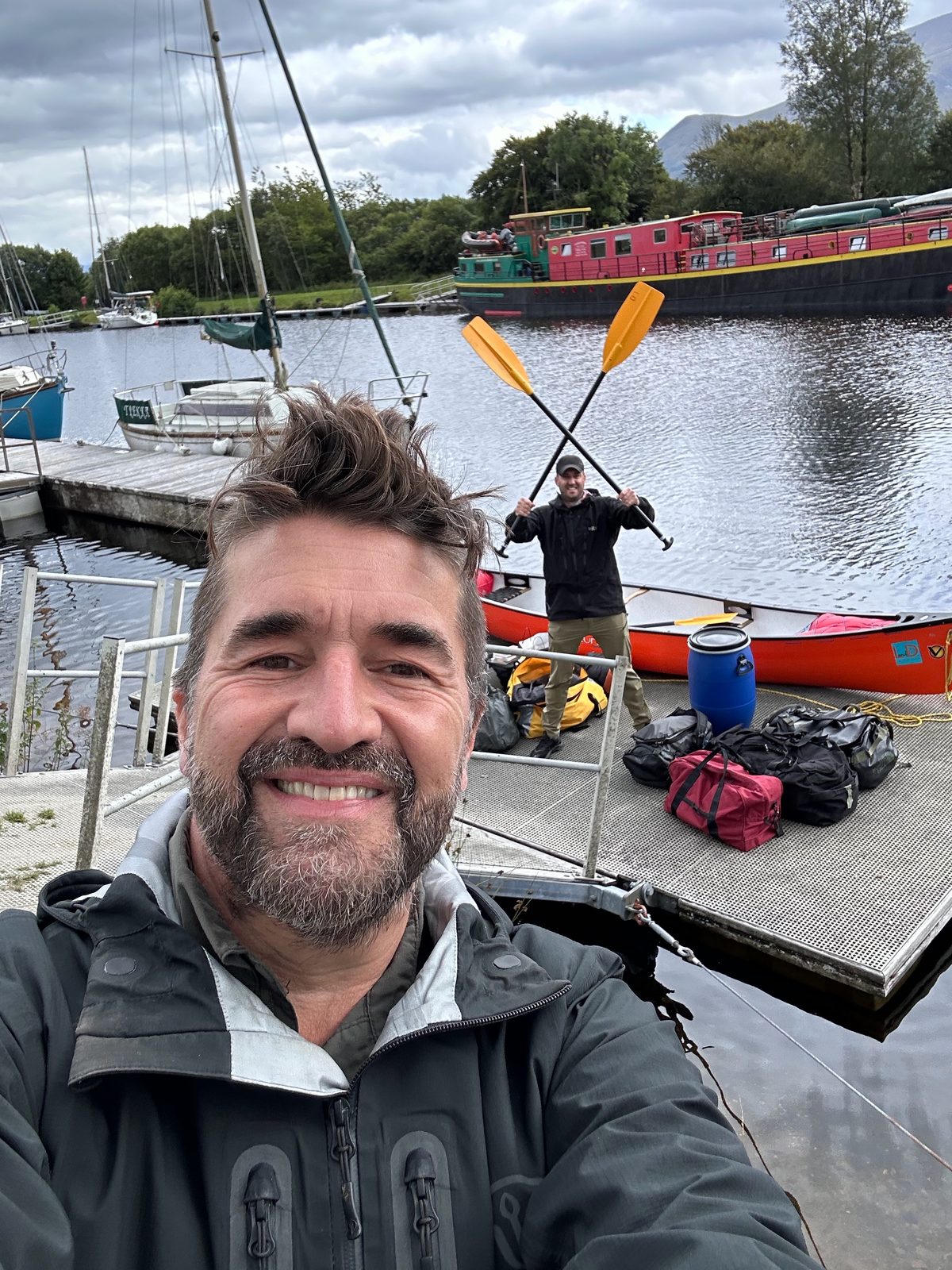
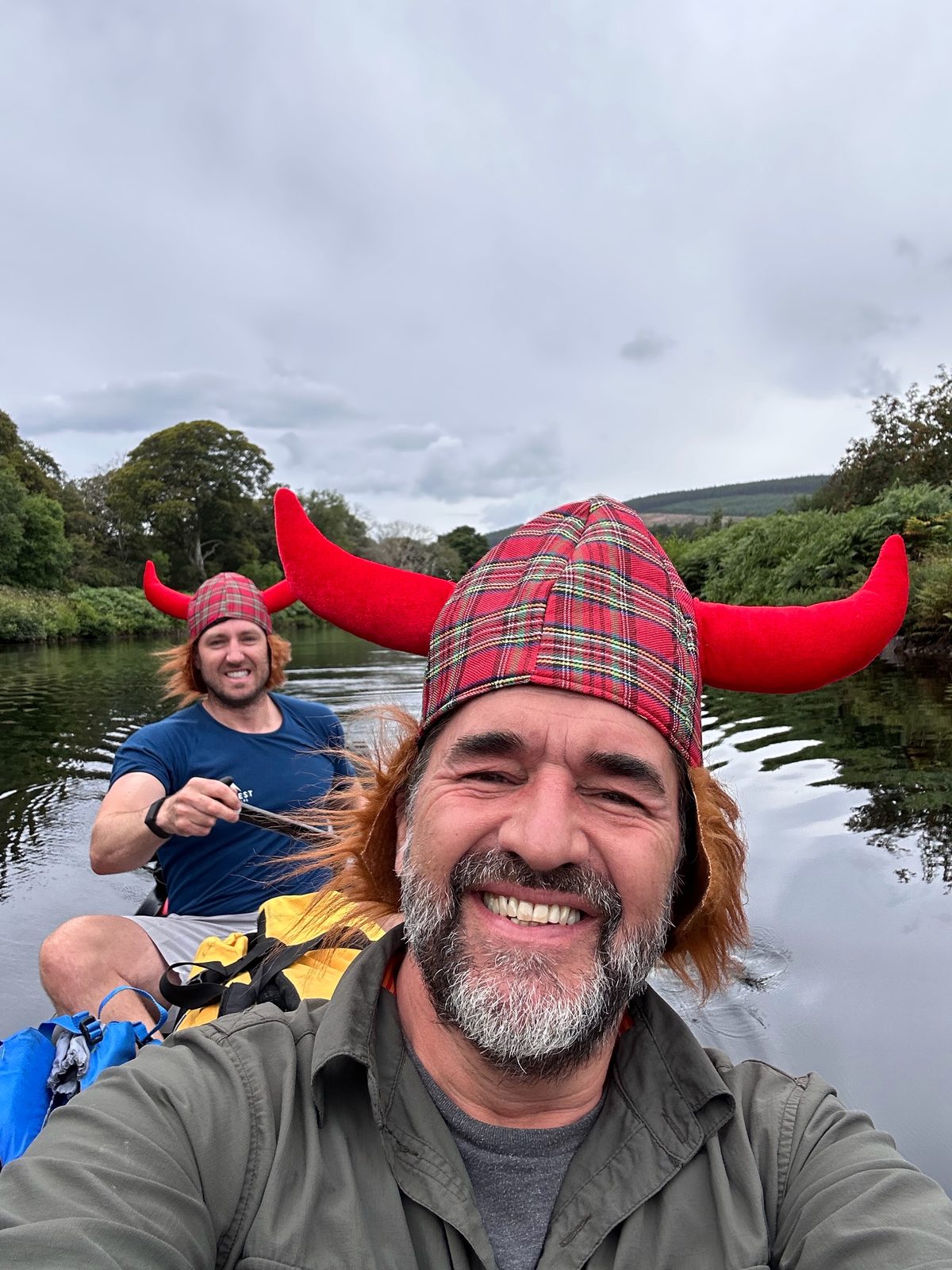
We woke up early the next morning, fueled by a hearty breakfast (complete with haggis), and collected our canoe at the top of Neptune’s Staircase. Before setting off, we made a quick detour into town to grab some last-minute essentials: freshly ground coffee, a good bottle of whiskey, steaks for the fire, and a couple of Jimmy hats (Google ‘Scottish Jimmy Hats’ if you’re curious). After a quick call home—to say goodbye and hear about the amazingly hot summer’s day they were having in the south of England—we set off on our Scottish adventure in the rain, heading towards Loch Lochy.
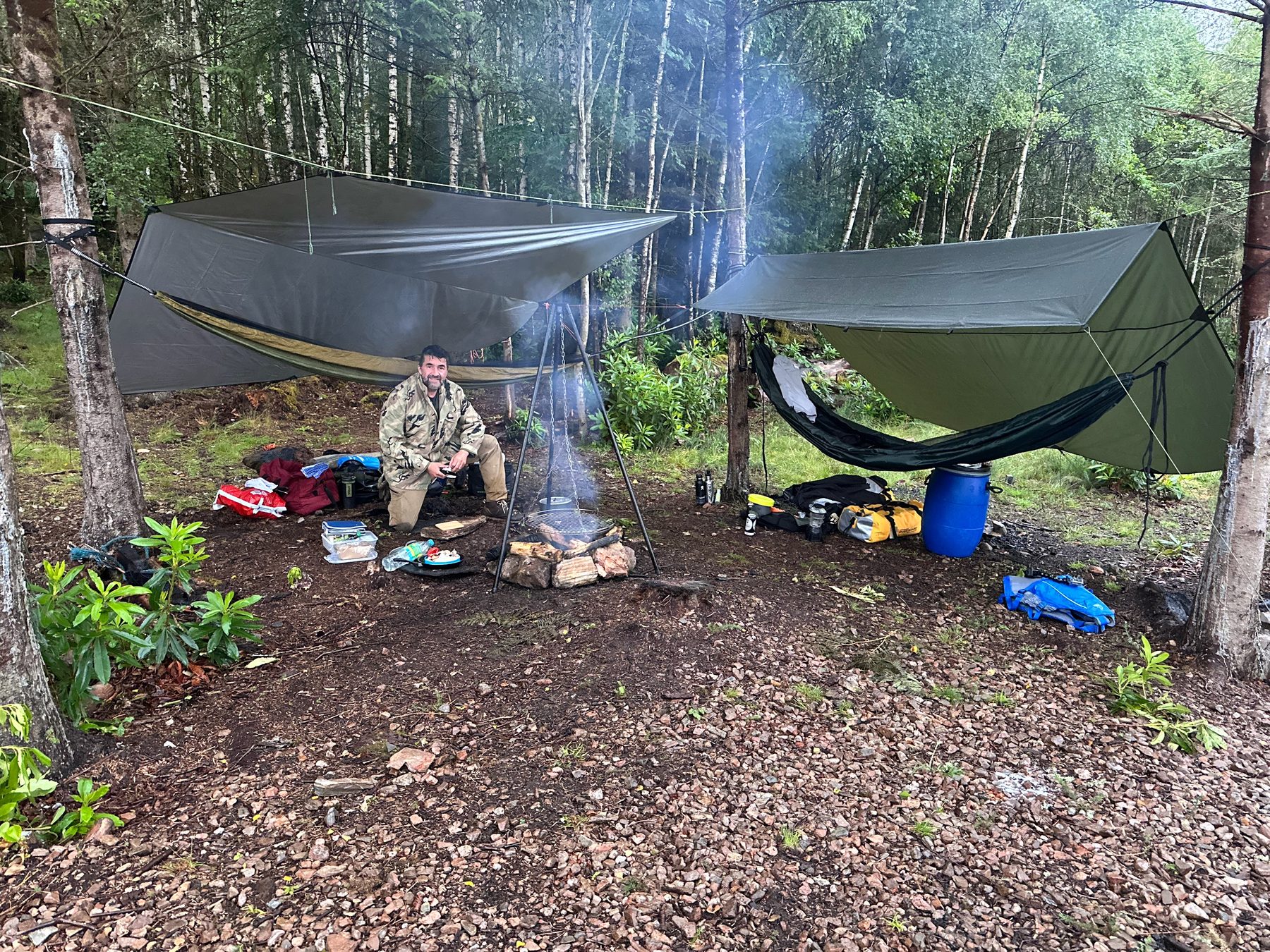
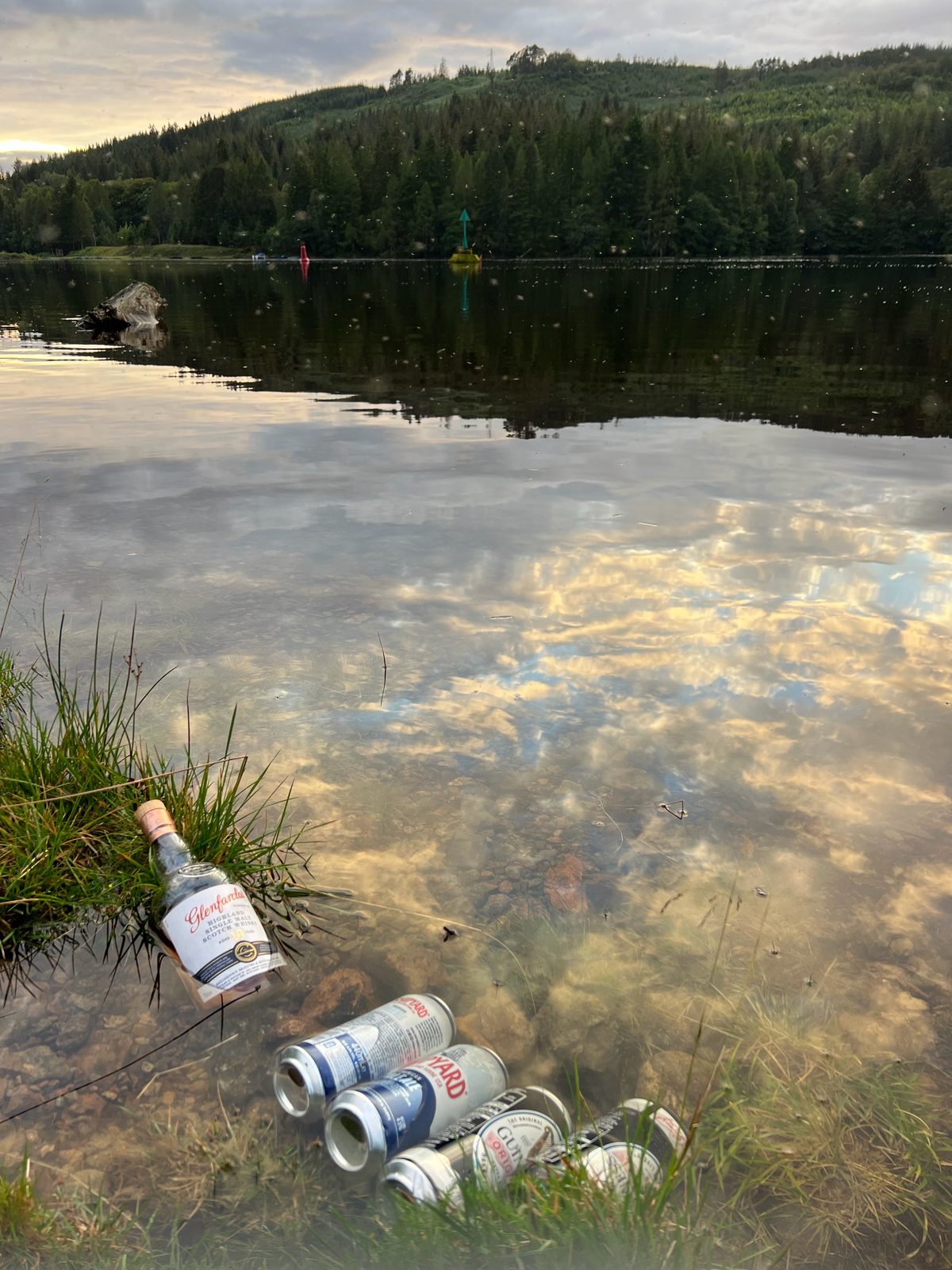
In a two-man canoe, the heaviest (and ideally most experienced) person takes the rear to steer. This responsibility fell to me. Never having rowed together before, we spent the first few hours zigzagging our way down the loch until we found our rhythm. We rowed for six hours that day, eventually finding a picturesque bay on Loch Lochy’s shore for our first night of wild camping. Once we had our bashas (improvised shelters) set up and our gear out of the rain, we celebrated the start of our expedition with flame-grilled rump steak and made good use of nature’s refrigerator by chilling a couple of beers in the Loch!
Day 2: Rain, lochs, and midges
Despite the rain’s best efforts to infiltrate our shelter, we managed to sleep reasonably well. However, our sleeping system was compromised, with water soaking into the ropes and slowly seeping into the silk of our hammocks. This meant a potentially uncomfortable night to come, but that’s all part of the adventure.
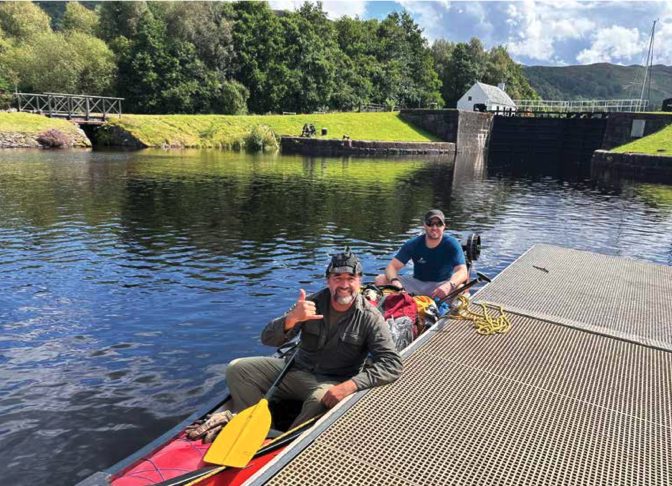
After breakfast and a brisk wake-up wash in the loch, we packed up and swapped our warm, dry clothes for yesterday’s wet ones. Our route that day took us through the rest of Loch Lochy and into Loch Oich, requiring us to unload and carry our canoe and gear around three small boat locks along the Caledonian Canal. It was scenic, but we were glad to reach Loch Oich.
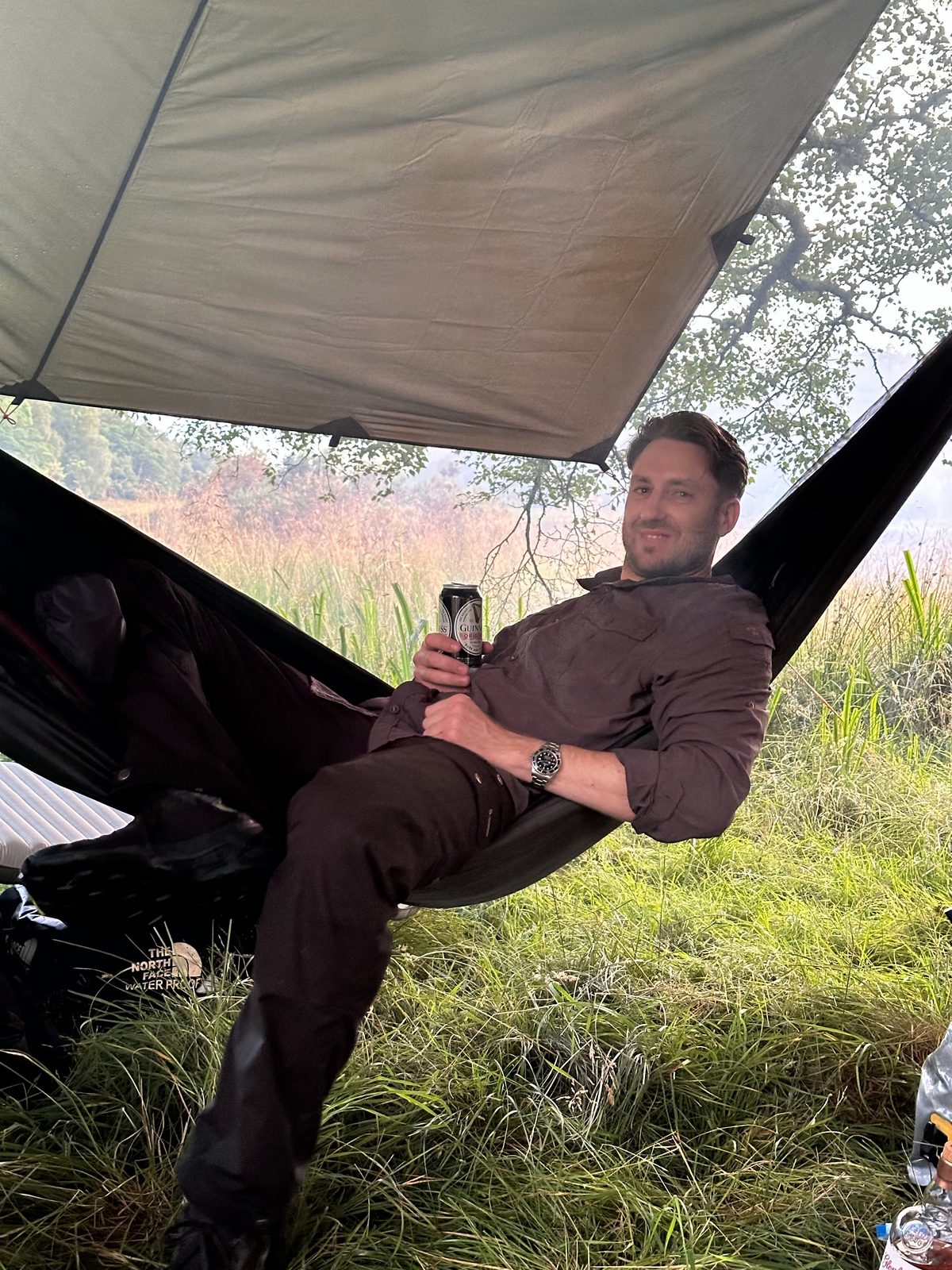
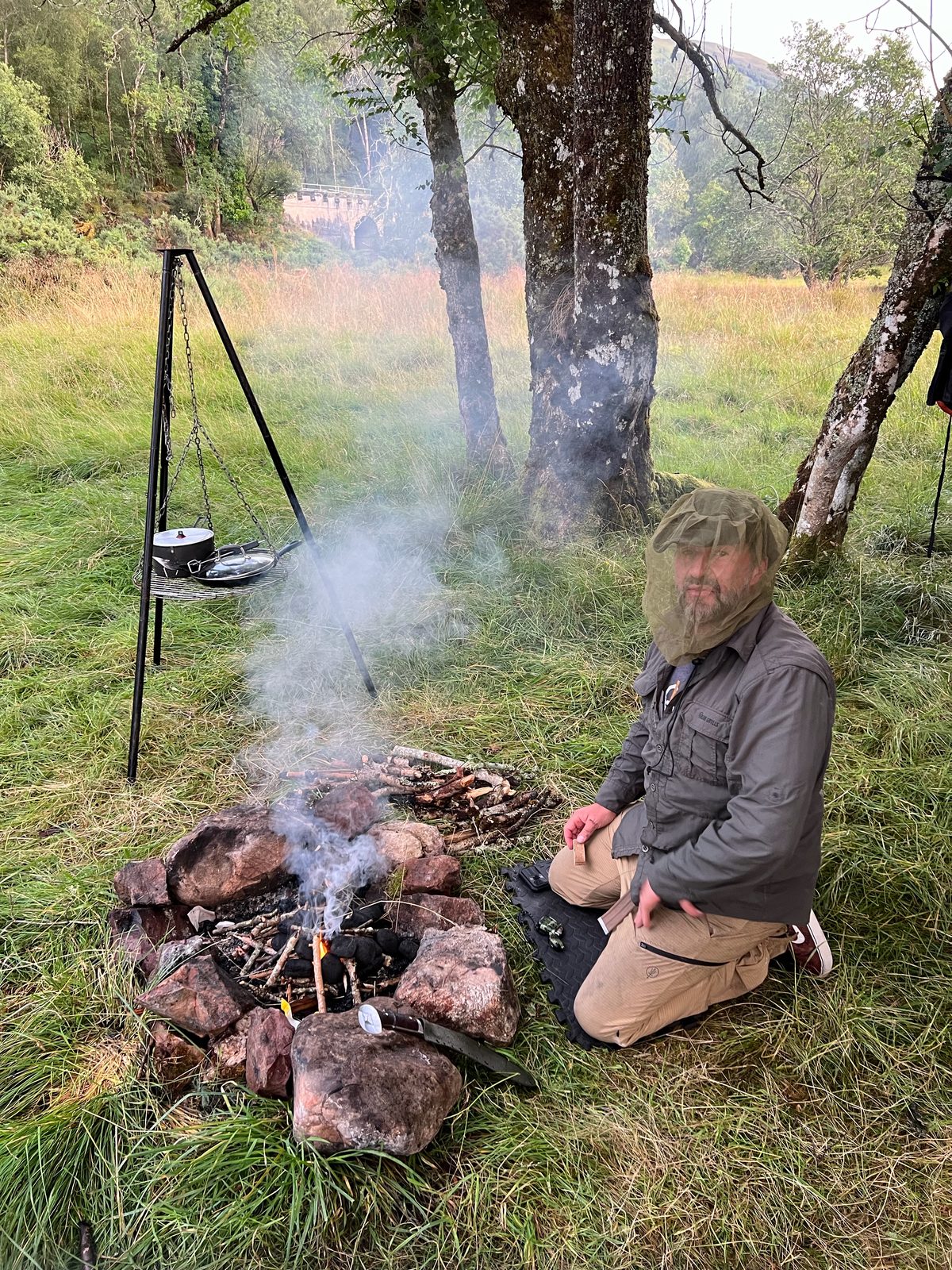
Our second campsite was a flat meadow halfway along Loch Oich, flanked by trees. As if by magic, the rain stopped just as we arrived, and the sun came out for the first time in two days. We laid out our sleeping gear to dry and set up camp. Whilst the sun was very welcome, the cloud of midges it brought, not so much!
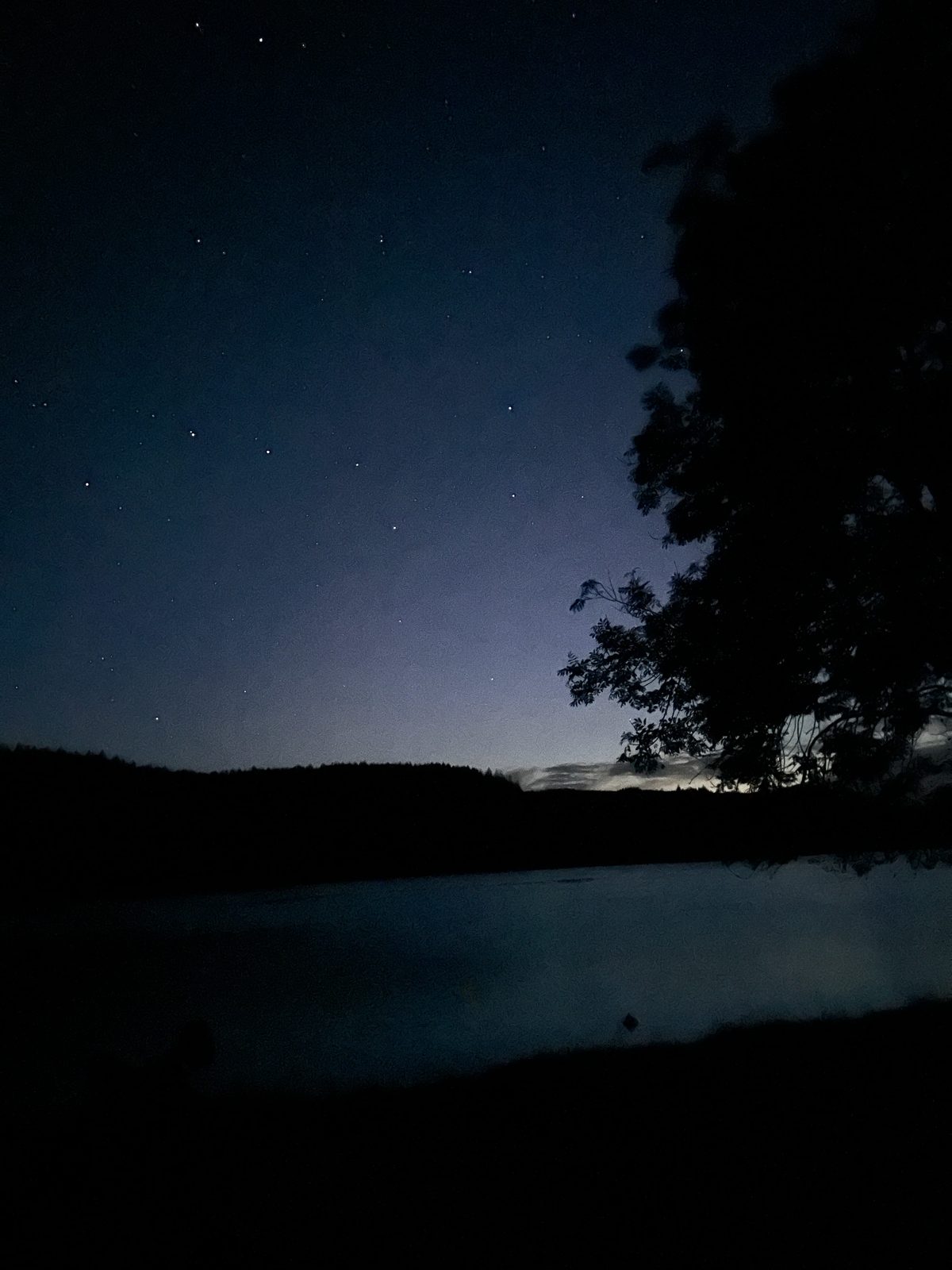
It was quite late by the time we’d eaten. The break in the weather changed our mood and we broke out the whiskey and cigars. There wasn’t a cloud in the sky and with no light pollution, the heavens were on full display! At some point, one of us looked at the time and it was 3:30 am—we’d been expecting it to be around 11 p.m.!
Day 3: The discovery of Haggis (the figurehead, not the food)
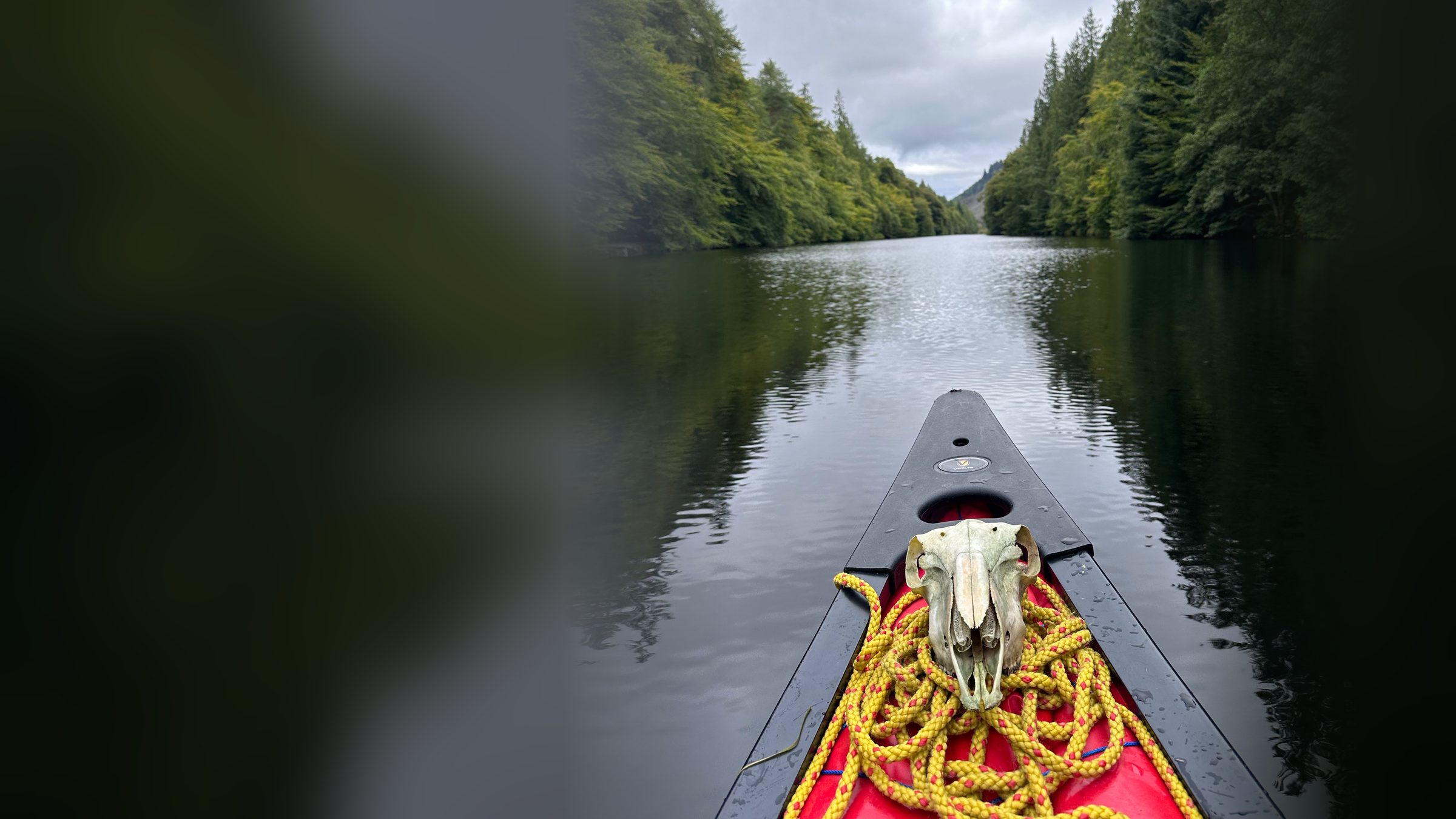
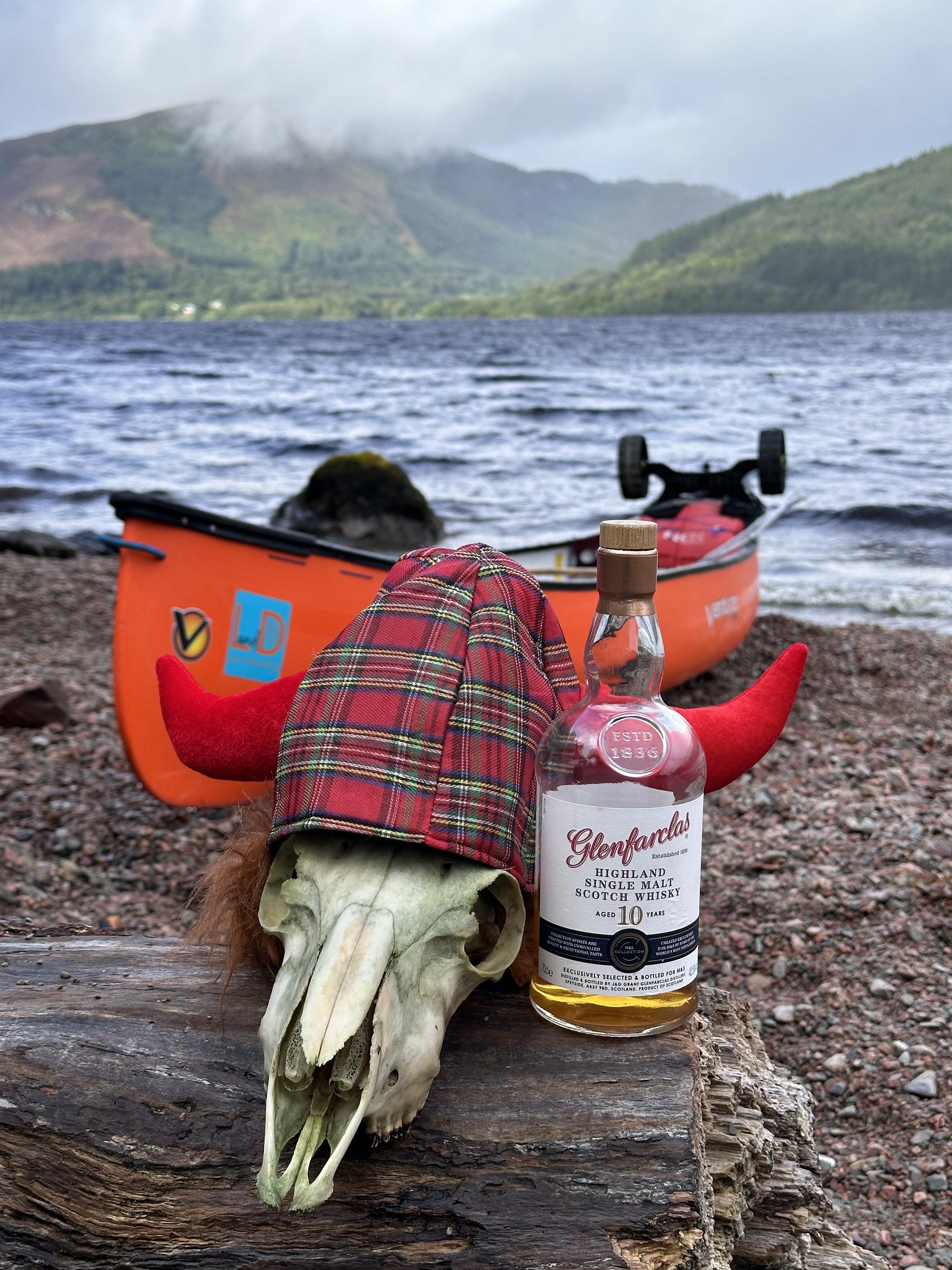
We awoke to a clear sky and packed up camp after breakfast. It didn’t start raining again until we were back in the boat, which was okay with us. We rowed to the end of Loch Oich and took a lunch break on a beach near the start of the canal system. It was here that we found the third member of our team, whom Bran affectionately named “Haggis.” Haggis began life as the head of a local sheep and became our boat’s figurehead and good luck charm. After lunch, we continued down the canal to Fort Augustus.
Famished, I managed to track down some Scottish delicacies at the local fuel station—a Bridie (Scotland’s attempt at a Cornish pasty), a Macaroni Pie (yes, it’s exactly what it sounds like), and a Tattie & Bean Scotch Pie (mashed potatoes and baked beans in a pie crust). It wasn’t gourmet, but it did the trick.
Leaving Fort Augustus, we rowed into Loch Ness, making camp about a third of the way along. With the wind picking up, we found a sheltered spot and hunkered down for the night, preparing for a tougher day ahead.
Day 4: Loch Ness and low-flying jets
I woke early the next morning to the unmistakable sound of approaching aircraft. A pair of RAF fighter jets on a low-level training flight a few hundred meters from us flew the length of Loch Ness, just 50 feet above the water. As unbelievable as this was, reality soon set in—they’d traveled the length of the Loch in around 4 seconds whereas it was going to take us a full two days!
We’d been bathing in the lochs every morning of the trip and this morning was no exception. It was however rather fresh! Being so deep, Loch Ness is famed for holding more water than all the lakes in England and Wales combined. It’s due to this volume of water that the loch stays a balmy five degrees celsius all year round.
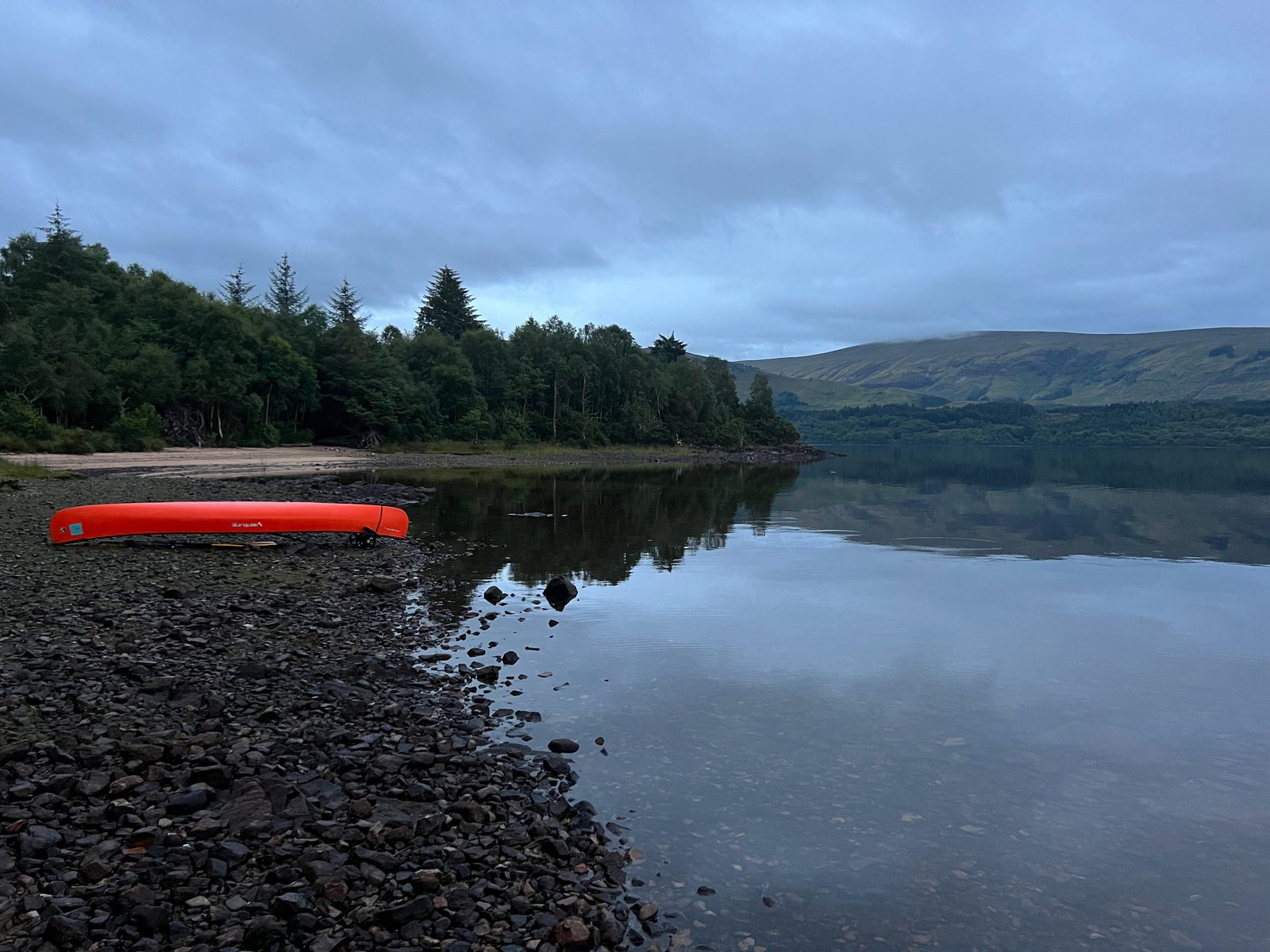
The wind had increased overnight. Luckily it was behind us; however, we knew we’d need our wits about us! It was going to be a long day on the water as we were to row the remainder of the length of Loch Ness, though we did have the first civilization of the trip to look forward to. Close to where we intended to camp in the evening was a pub and we’d have definitely earned some cold refreshments by the end of the day.
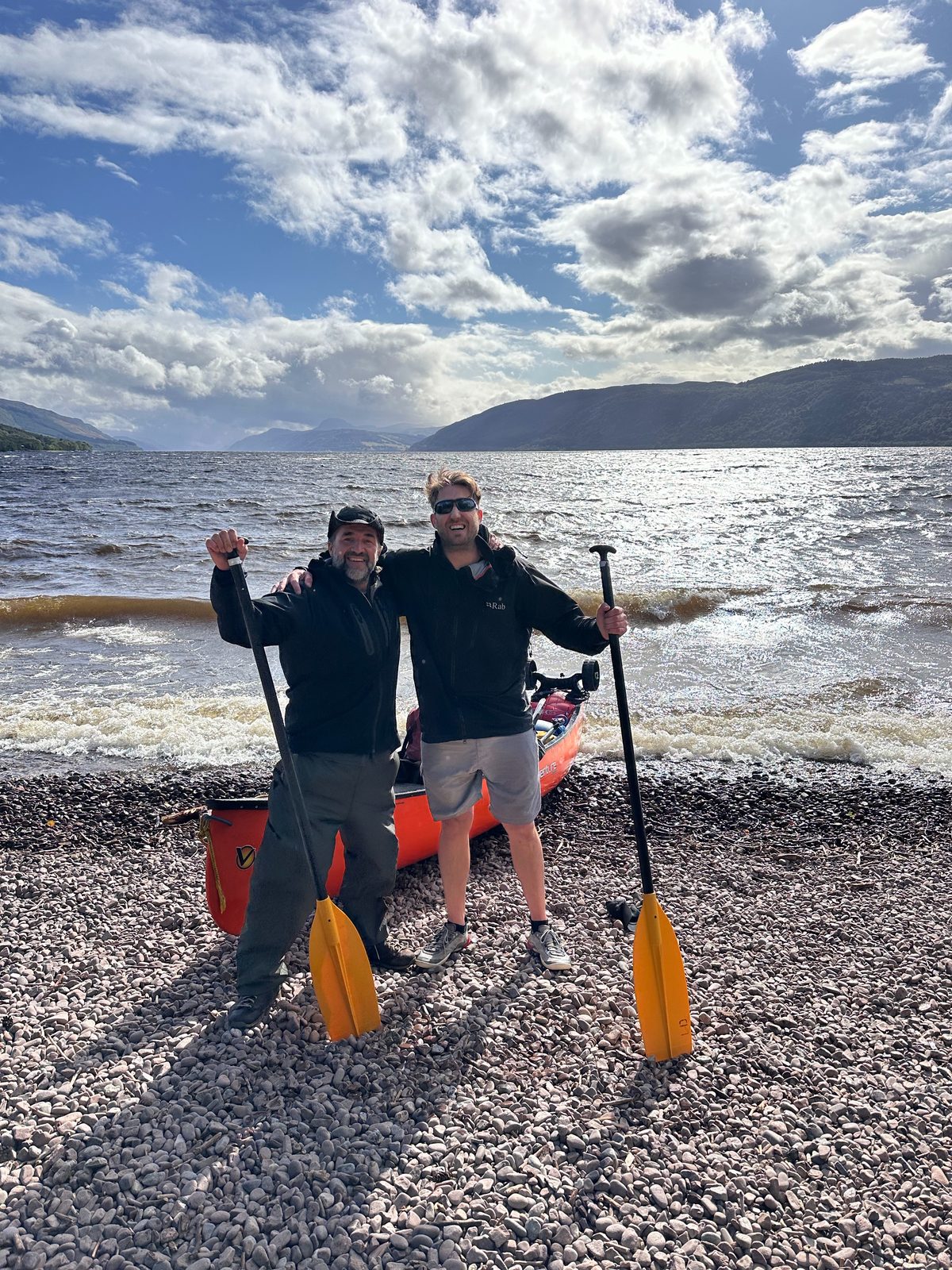
We tried to stay close to the shore for the most part, even then the swell was still taller than us at times and we ended up surfing a lot of the way, constantly battling the boat’s heading. The campsite was at the opposite end of the beach to where we’d land, so we knew at some point we’d have to attempt to cut across, or else carry the boat and all our gear 1.5km. We waited as long as possible and then decided to make the turn for the campsite. We quickly aborted this plan as the swell tried to roll us out of the boat and resigned ourselves to a beach landing.
With the wind gusting 30-40 knots and the swell having had the entire length of Loch Ness to build, we’d be surfing onto the beach. Ordinarily, it wouldn’t have been so bad - even if it did end in disaster - however with 50 or so tourists on the beach all with their cameras out, looking for Nessie, if it did go wrong there’d be no escaping humiliation! With me steering and shouting from the rear, and Bran paddling for his life at the bow, we managed to time it perfectly and surfed straight in, where a local windsurfer kindly grabbed the bow so we could jump out and the three of us pulled the boat up the beach out of harm’s way.
We made it! Now we had the thankless task of carting everything up the beach before we could even think about setting up camp. Being next to the pub, the Dorres Inn, we made an executive decision and decided to go for a well-earned pint first!
The wind was relentless, but we managed to get some sleep with the Bashas set low and the opening into the wind, minimizing the risk of them tearing. We decided to put our mattresses on the ground in this wind tunnel and sleep out in the open. With the wind as it was, we wouldn’t need to worry about midges.
Day 5: The final push
Our last day on the water started with a challenge—with the wind having blown for over 24 hours onto the beach, we needed to get off the beach and round the headland into the final stretch of Loch Ness. It was the only time we donned our life jackets during the trip, and after 30 minutes of intense rowing, we were relieved to be in calmer waters.
The row into Inverness was smooth and while scenic, fairly uneventful - a gentle end to our adventure. We arrived mid-afternoon, and Logan, the owner of LandD Adventures, was there to collect the canoe and give us a lift back to Fort William.
We were both looking forward to a hot shower and good night’s sleep in a proper bed; however, the adventure wasn’t quite over. Upon arriving at the Travelodge, and some initial confusion, the receptionist informed me that I’d booked the hotel for the following night. After a brief panic, we found a room elsewhere, showered, and ended the evening with a curry, reminiscing about our epic journey. Naturally, the drinks were on me for the hotel mix-up.
The next morning, we headed back toward London, and as we crossed the border into England, the rain stopped, and the sun came out—almost as if to welcome us home.
First published in The Log, the magazine of the Circumnavigators Club.